


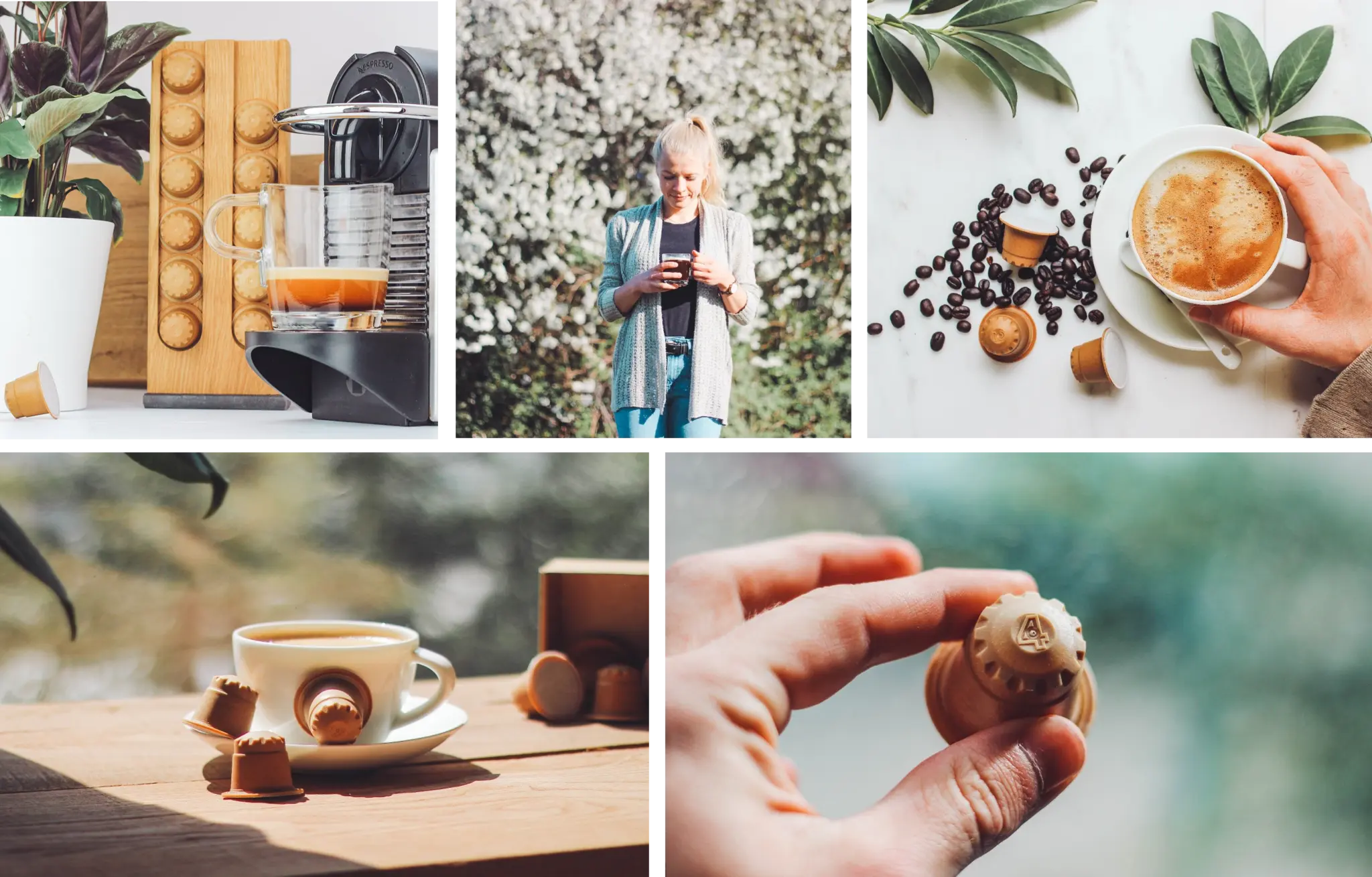
Time for a well-deserved, sustainable coffee break ☕

Experimental vineyard” project
Since its foundation in 2011, W+P has been determined to create value not only for its customers and employees, but also for future generations. This vision shapes our daily actions and directs our focus towards the environment and society.
For this reason, the “Experimental Vineyard” project was initiated in 2017 by company founders Jens Schneider and Roman Wagner. Located on the outskirts of Frankfurt, but already in the Lower Franconian Vorspessart, a small south-facing slope in the market town of Mömbris offers the best conditions for a special project. This region offers many city dwellers relaxation and a retreat from the hustle and bustle of everyday life. The locals love their traditions and are very attached to their homeland.
The “experiment” is aimed at local public institutions such as kindergartens, schools and clubs in order to learn how to deal sensitively with nature, to experience the cultural landscape in the Kahlgrund / Vorspessart and to support identification with the homeland. In particular, cultural and historical aspects of the local/community history and community are to be expressed through the project. Local politicians are following the project with great interest, as the initiatives mentioned and the expected products support a special identification with the local region.
100 vines were planted at the start of the project, the cultivation area was fenced off and a wire system was installed. After the first growing phase, the building application for a small vineyard hut was approved in 2020. In addition to storing the various tools, the hut will primarily be used to collect and store water so that the sensitive vines can be watered during the hot months.
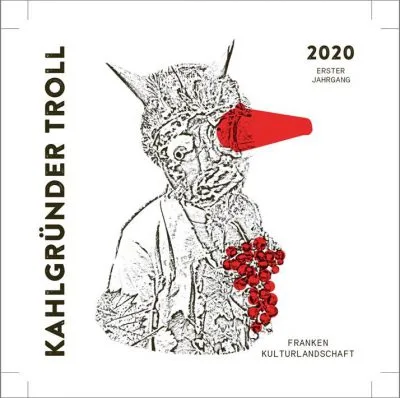
In an initial “art and culture” collaboration, the vintage labels for the first edition (2020) have been designed. As part of a one-week mask workshop with around 15 children, special fantasy creatures were created, including the motif of the “Kahlgründer TROLL”, which adorns the first front label of our wine.
The hand-picked harvest in September 2020 was carried out in cooperation with local winegrower Johannes Höfler, who has been supporting the project in word and deed from the outset and refines the small yield from our vineyard in his wine cellar.
As soon as the pandemic restrictions allow it again, the great place to stay at the vineyard will be used for workshops (vacation games, cultural work, etc.), nature studies and social activities. This will support the sensitization of future generations to nature and culture, which has already met with great interest from the public.

Sustainable flooring with style
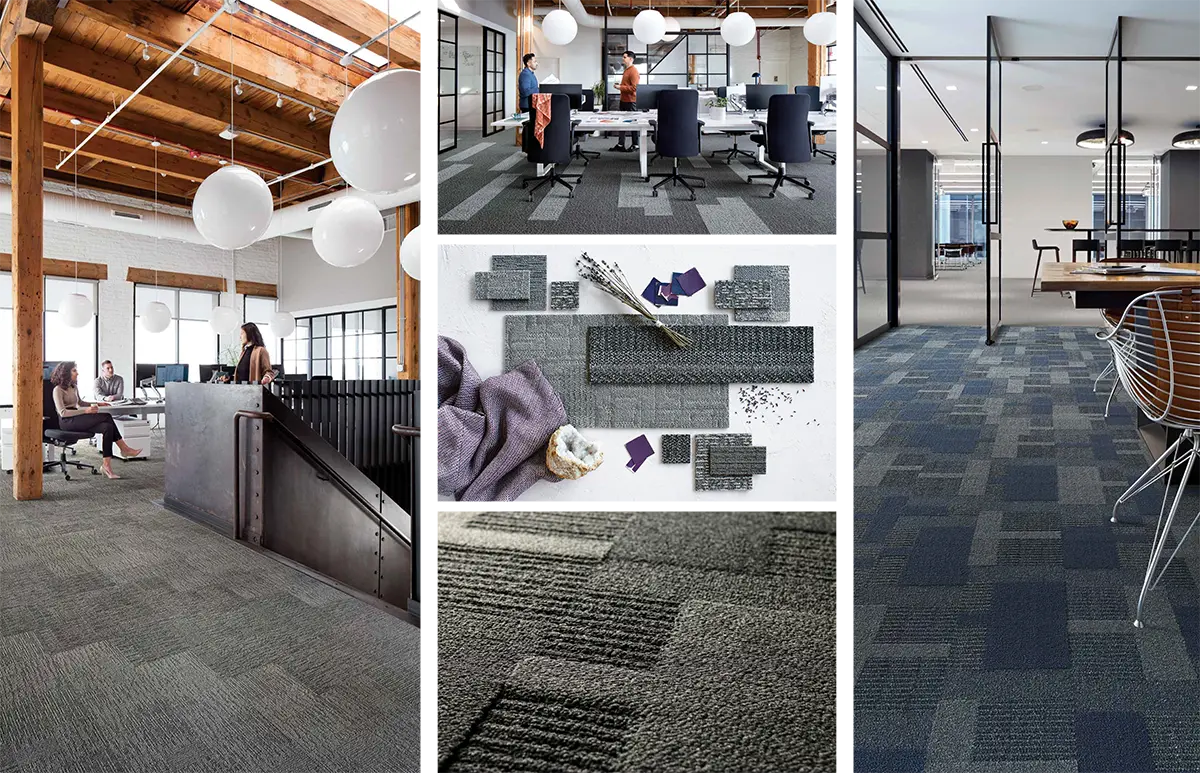
Healthy planet and happy employees thanks to stylish flooring. Thanks to the Embodied Beauty collection from Interface this is very easy to achieve. With this collection, Interface shows us that attractive design and a respectful approach to our environment do not have to be mutually exclusive.
As part of the Carbon Neutral Floors™ program, all products in the collection are CO2-neutral over their entire life cycle. In addition, three designs are even CO2-negative for the first time.
Embodied Beauty is inspired by Japanese ikigai and the aesthetics of minimalism. From narrow monochrome patterns to large graphic tufted textures, all styles in the collection can be tastefully combined with each other and create pleasant contrasts. The collection features a calm, muted color palette in warm and cool grays as well as natural colors for additional design options.
The benefits of Embodied Beauty at a glance:
- Reducing the CO2 footprint of indoor spaces
- First CO2-negative carpet tiles
- Stylish design
- Warmth and walking comfort
- Improvement of room acoustics – better concentration of employees
- Can be combined individually thanks to different patterns and materials – even with other collections
- High durability, as they can withstand heavy use
- High flexibility, as tiles can be replaced selectively if damaged
© Foto: Interface

First WELL certification in Bavaria – MSD Germany receives gold for “Die Macherei”
Back in June, the MSD Germany headquarters in the Macherei in Munich was awarded the coveted WELL Gold certification. This award from the International WELL Building Institute (IWBI) promotes a targeted commitment to improving the well-being and health of building users. MSD Germany is thus one of the first companies in Germany and the first in Bavaria to receive this award.
“The sole aim of Well certification is to positively influence the comfort, health and well-being of users through the design of buildings and interiors. This is exactly what the Employee Experience is all about. We want to create an inclusive environment for our diverse employees in which they all feel very comfortable. We set ourselves this high standard because it makes us more creative and productive. At the same time, we increase our attractiveness for future talent”, explains Wolfgang Stenger, Employee Experience Lead & Inclusion Officer, MSD Deutschland.
As an accredited specialist, Ramona Schuster accompanied the WELL certification on behalf of Hoinka: “In addition to the planning and structural aspects, operational and personnel-related issues also play a decisive role. The challenge is to prepare the requirements for the building as well as for facility management and human resources in accordance with the WELL guidelines and to document them continuously during operation.“
Dr. Roman Wagner, Managing Director of W+P workspace consulting, brought the participants together and managed the intensive process: “WELL certification is an ongoing process that must be repeated regularly. This is the only way to ensure continuous improvement of processes and standards. Regular on-site appointments, extensive measurements and intensive documentation ensure high quality for health and well-being in the office.”
The whole team at W+P workspace consulting congratulates on this award!
We wish all employees at MSD a great new working experience!
You can find more information about our certification partner HOINKA here: www.hoinka,com
Our customer: MSD – Medikamente und Impfstoffe – Gesundheit für alle

That’s why we need offices – more than ever!
In a panel discussion with Stefan Liebert and Sabine Schillinger-Koehne from PATRIZIA Germany and Max Samer from Augsburger Allgemeine, the #FutureofWork was discussed with all participants of the HR Network Meeting of Augsburger Allgemeine.
Dr. Roman Wagner also summarized some important points on the topic:
The surprise of successful remote working: we were amazed at how quickly and seamlessly our customers adapted to remote working and overcame previous obstacles. However, since returning to the office, a new challenge has arisen – balancing office work with the benefits of remote working. It has become clear that while remote working is technically feasible, the last three years have highlighted the negative impact on collaboration, company culture, employee engagement and innovation. That’s why offices are more important than ever.
Tangible corporate culture: For service-oriented companies, the office is an ideal medium to present the company’s vision and brand to both customers and employees. Personalization and individualization are crucial in office design, as they give employees the opportunity to contribute to the design of the workplace and increase their identification with the company.
Flexibility for future changes: To adapt to future changes, offices should be thoughtfully designed with flexible building systems, low-tech solutions and fewer walls. Room-in-room solutions are independent of the building structure and allow for easy adaptations. The main focus should be on creating the best possible workplace for different activities and thus promoting an activity-oriented working environment.
Tangible sustainability: Companies are increasingly prioritizing sustainability and trying to align their office projects with their sustainability strategies. The focus is on authentic and measurable sustainability solutions, visible elements such as wood, plants and water, and involving employees in the decision-making process to demonstrate the company’s commitment to sustainability.
The success of hybrid meetings: Hybrid meetings, where participants are in the office, at another location or on the road, require the right technical equipment and a well-designed space. Adequate lighting, visibility, acoustics and clear communication channels are crucial. Establishing meeting rules, e.g. clear facilitation, shorter meetings and breaks, contributes to the success of hybrid meetings.
The importance of the office for Generation Y/Z: Although Generation Y/Z employees are less likely to work in traditional offices, they still value the office as a key element in their connection to the company and its vision. They need a sense of community and reject isolated workspaces. Having grown up with technology, they expect a seamless transition between their personal and professional lives and value flexibility and autonomy in their work arrangements.
The future of work lies in creating a balance between time, place and space. In the office, it is important to promote collaboration, corporate culture and sustainability and to constantly adapt to changing circumstances.
In our new “Beautiful office – no one there” campaign, we explicitly address the issue of raising office occupancy from below 30% to over 60% so that employees are happy to return to the office and surplus office space can be sublet.
Are you interested?